Explore a field
Cargo logistics and dangerous goods
Cargo and logistics connects goods, information and organizations across a journey that extends well beyond the airport.
What you’ll understand
- Trace shipper-to-consignee responsibilities and recognize special-cargo boundaries.
Before you start: Start here; no specialist background is assumed.
Where this fits
Goods may pass through several facilities and transport modes before and after a flight. A useful understanding follows the handovers: who has the goods, who holds the information and who owns each responsibility.
Work areas at a glance
- Forwarding and the supply chain
- Cargo facilities and handling
- Special cargo and cold chains
- Dangerous goods and public-authority interfaces
Forwarding and the supply chain
A freight forwarder arranges transport and related services; a carrier performs carriage. The shipper and consignee anchor the sending and receiving ends. One company can perform several functions, so job titles and company labels need context.
Cargo facilities and handling
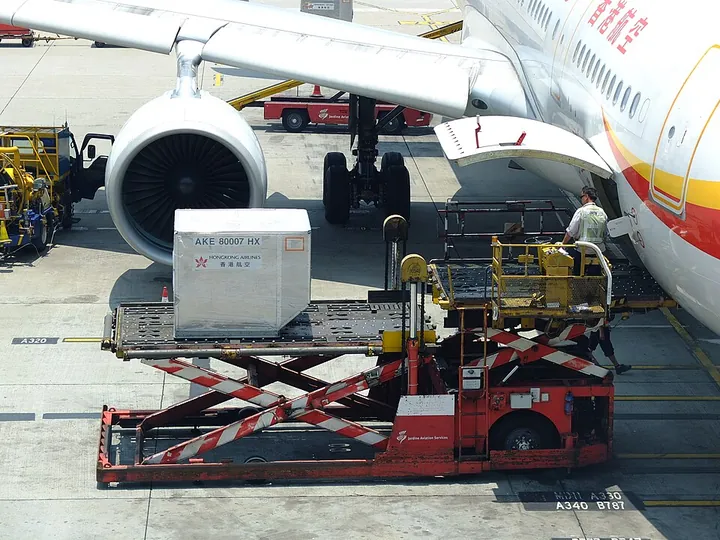
Cargo agents, warehouse teams and handlers connect documentation, storage and physical movement. Unit load devices (ULDs) organize compatible aircraft loads, but equipment alone does not establish acceptance or suitability. Records and actual location need to remain aligned.
Special cargo and cold chains
Temperature-sensitive goods, live animals and other special cargo may need dedicated expertise. A cold chain concerns conditions across a journey, including interfaces between organizations. One suitable facility does not prove end-to-end suitability.
Dangerous goods and public-authority interfaces
Dangerous-goods responsibilities require trained personnel using current applicable rules. Customs and security add separate interfaces. IATA’s catalogue treats these as distinct subjects; this hub intentionally stops before classification, packing, acceptance or clearance instructions.
Connections across aviation
- Airports and ground services — Airport cargo facilities link airside services to road and warehouse networks.
- Airlines and flight operations — Cargo operators coordinate aircraft, crews and flight support.
- Aviation business law and economics — Contracts, customers and logistics economics influence service choices.
Illustrative, non-operational example
Illustration only — not instructions.
Follow a fictional non-hazardous exhibition model from sender to receiver, drawing both physical handovers and information updates. Do not choose packaging or decide shipment acceptance.
Common confusions
Air cargo begins when goods reach an aircraft.
Collection, preparation and facility interfaces are also parts of the journey.
Scope and limitations
No dangerous-goods, packing, customs, security or load-planning advice. A real consignment requires the carrier, trained specialists and applicable authority processes.
People doing this work
Useful terms
Read next
Sources and official next step
- IATA subject areas — Industry subject scope; not binding law
- ICAO training catalogue — Global orientation; catalogue only