Airport and ground operations
Airport and ground operations is a family of jobs rather than one universal qualification. It includes passenger and baggage services, cargo, aircraft servicing and airport coordination. Some work takes place in a terminal; some is in restricted operational areas. Start by identifying the task, employer and location. This guide helps you ask about the training and authorization relevant to that specific role.
Educational reference · 27 October 2026. Educational reference — verify current requirements with the relevant authority. This is not a qualification, admission decision or operational publication.
Download Airport and ground operations (educational reference PDF)
Global educational core; explicitly labelled jurisdiction examples only
What the work contributes
- Help passengers, baggage, cargo and information move between the right teams, supporting an orderly airport operation.
- Support safe aircraft turnarounds through coordinated specialist work, while recognising that individual duties depend on training and authorisation.
- Notice and report concerns, communicate delays accurately and protect the quality of handovers rather than trading safety for speed.
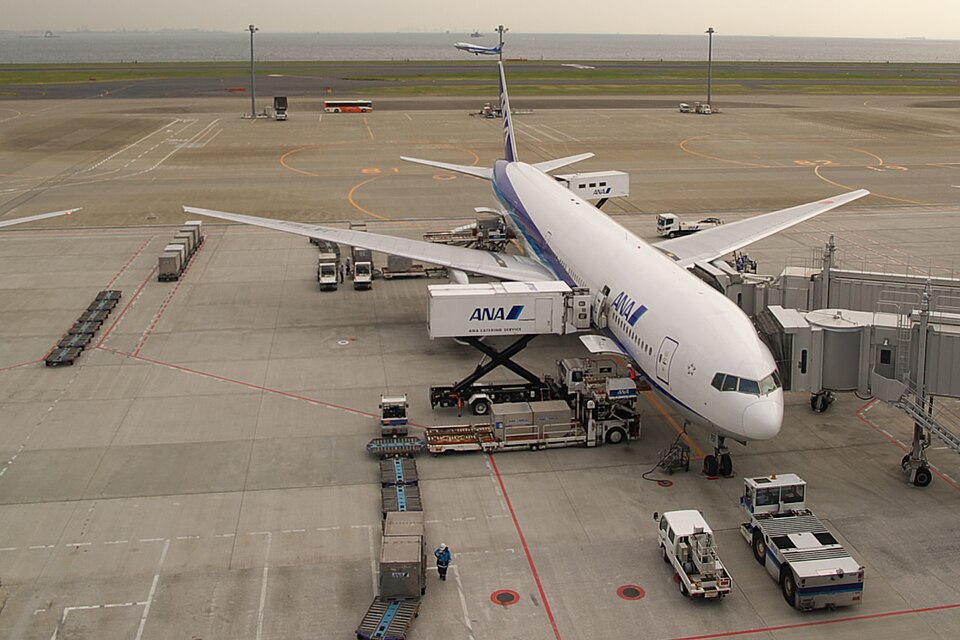
Illustrative photograph — not evidence of local requirements, current operations or employer endorsement.
Flight arrangement (289523703).jpg — Yamaguchi Yoshiaki; CC BY-SA 2.0; Wikimedia Commons. · CC BY-SA 2.0 · Original source · Full credits, source date and changesAn illustrative working day
Original simplified example only; not a duty schedule or operating procedure.
- Team briefing: A new colleague confirms the assignment, supervisor, permitted activities and any learning objectives.
- Assigned support: Work takes place alongside trained colleagues. Being present airside does not by itself authorize driving or specialist equipment use.
- A changed plan: A delay or unexpected finding is reported. The team clarifies responsibility rather than improvising around unfamiliar hazards.
- End of assignment: Relevant information is recorded and questions are discussed. Passenger-service, baggage and airport-operations teams can have different daily patterns.
Role boundaries
The airport operator, an airline and a ground-handling contractor may employ different teams at the same location. Airport planning, security screening, aircraft maintenance and ground handling are not interchangeable careers. A general course is not an access pass or permission to drive or use equipment.
A learning task
Fictional example: Leila is interested in working at an airport but has only searched for airport jobs. Leila compares passenger service, baggage handling and an airport-operations role. The duties and employers differ, so Leila asks about the specific location, training and work pattern before choosing a course. Interest in the airport environment becomes a more focused decision.
Sketch a fictional passenger or baggage journey through an airport using broad stages only. Mark where two organizations exchange information. Identify one question about that handover without drawing a real restricted-area route or prescribing equipment procedures.
Practical next steps
- Choose one branch and distinguish the airport operator from airline and contractor employers.
- Read a current role description and ask about the actual location, duties, work pattern and available learning support.
- Verify who arranges induction, access and task-specific training and what evidence or costs are involved.
- Map one educational handover and record the communication skill or source question you will investigate next.
A typical learning sequence
- 1 Choose a branch of airport work — Select an initial branch: passenger-facing work, baggage or cargo, aircraft servicing, or airport coordination. Read actual vacancies and distinguish an airport employer from an airline or ground-handling contractor.
- 2 Build dependable work habits — Build useful foundations in communication, punctuality, basic numeracy and following written information. Prepare examples showing how you spotted an error, asked for help or coordinated with a team.
- 3 Ask who provides local training — Ask the prospective employer about local induction, access arrangements and task-specific training. Identify who provides each element and whether it occurs before recruitment, after selection or under supervision.
- 4 Separate access from task permission — Treat driving and specialist equipment as separate competence questions. A public-road driving licence or general aviation course should not be assumed to confer permission to operate at an airport.
- 5 Understand progression before assuming it — Complete the required employer and airport learning pathway, keep records and confirm task limits. Discuss further roles only after understanding the additional training, assessment or authorisation they involve.
Jurisdiction examples — not worldwide rules
United States · Airport certification and duty scope
Federal Aviation Administration (FAA)
At airports subject to Part 139, section 139.329 requires the airport certificate holder to control pedestrian and ground-vehicle access to movement and safety areas and ensure relevant procedural training before those duties and recurrently. [G1]
United Kingdom · Airside-driving scope and proposed ground rules
UK Civil Aviation Authority (CAA)
CAA CAP 790 addresses airside-driving authorization and training under an aerodrome permit scheme, with a stated aerodrome scope. It is not a qualification for every airport occupation. Separately, the CAA ground-handling page still describes a developing regulatory framework; a proposal should not be presented as an already operative general licensing scheme. [G3, G4]
Keep three kinds of information separate
- Regulated and local controls
- US Part 139 duties and UK airside-driving schemes have defined scopes. Check the airport, area, activity and local authorization. The UK ground-handling page describes a developing proposal, not a new universal individual licence. [G1, G3, G4]
- Employer conditions
- Recruitment preferences are separate from airport access and task-training controls. Ask about the particular site, equipment, vehicle and role, including any support or adjustments.
- Typical preparation
- Teamwork, clear communication and attention to information are useful foundations. They are not access credentials or permission to drive, service aircraft or operate equipment.
Sources and jurisdiction
- [G1] 14 CFR 139.329 — Pedestrians and ground vehicles — United States. Airport access procedures and initial/recurrent training for specified areas and duties.
- [G2] AC 150/5210-20A — Ground Vehicle Operations — United States. Airport-specific training guidance; general use is not mandatory.
- [G3] Ground handling — United Kingdom. Breadth of ground-handling activities and proposed regulatory framework.
- [G4] CAP 790 — Requirement for an Airside Driving Permit Scheme — United Kingdom. Defined scheme scope and airport driving authorisation/training distinctions.