Airline catering coordinators manage information linking airline requests and catering operations. They track orders, changes and service records rather than necessarily preparing food or driving to aircraft. The reviewed role is a catering-company position, not a licensed flight-dispatch occupation, even if dispatch language appears in a catering workflow.
Educational reference · 27 October 2026. Educational reference — verify current requirements with the relevant authority. This is not a qualification, admission decision or operational publication.
Job-specific employer examples below are separate from the broad sector guides. They are selected evidence, not an application service, a live vacancy feed, worldwide eligibility rules or an assessment of your circumstances.
Specific employer examples
1
Supporting employer context sources
0
Evidence last checked
2026-10-27
Countries / scope represented
Australia — Sydney, New South Wales
Legal / licensing applicability
unresolved
Reference status
Educational reference — verify current requirements with the relevant authority.
Where employers use this role
Airline catering provider
Airline service supplier
What the work involves
Coordinate catering orders and changes with responsible teams.
Keep operational and customer-service records accurate.
Raise discrepancies and support service reporting within assigned authority.
Work settings
Catering operations office, liaising with airline and production/delivery teams across a rostered operation.
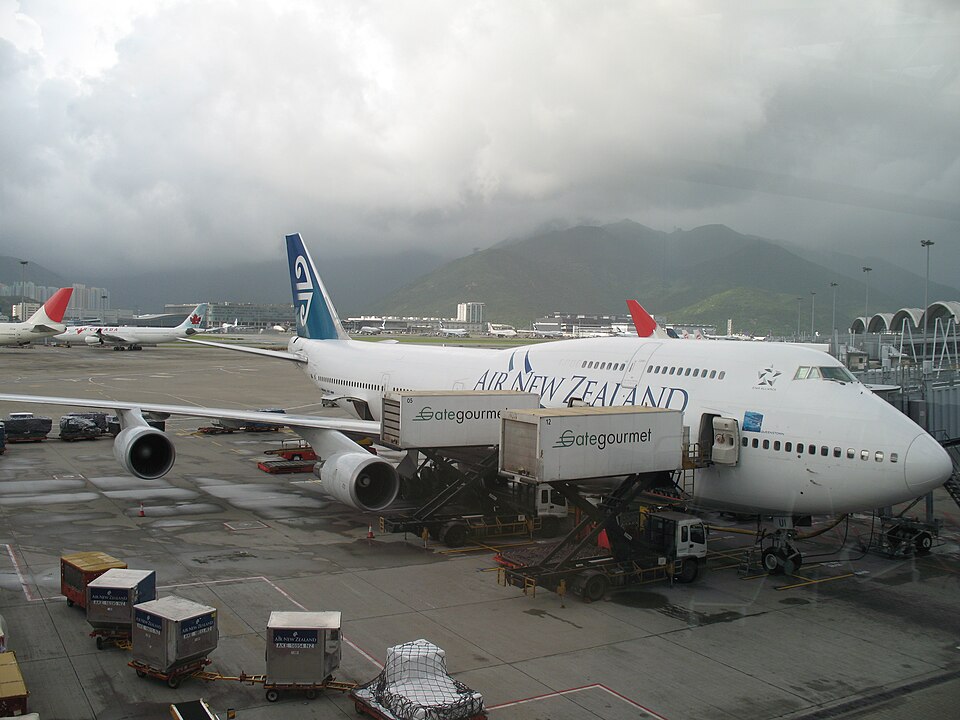
Illustrative photo. Two catering trucks are raised beside the cabin doors of a widebody airliner, with cargo dollies in the foreground. The different equipment heights show how cabin supplies and lower cargo areas require different access arrangements around a parked aircraft.
Illustrative role/sector context. This does not depict or verify the employers, vacancies, qualifications or countries discussed below.
Actual employer examples — keep each country and notice separate
Essential, desirable and other conditions retain the author’s source classification. An empty category means no separate requirement was established in the reviewed source, not that employers have no requirements. Historical or closed notices are examples, not current vacancies.
Requirements follow the source headings; preferred items are kept separate. A missing requirement is not evidence that no requirement exists.
Employer essential requirements
Relevant customer-service, airline, catering or logistics experience.
Communication, organisation, problem-solving, multitasking, attention to detail and stakeholder coordination.
Ability to work a 24/7 roster.
Employer desirable requirements
ERP or operational-systems experience.
Other stated conditions
Recruitment includes the stated health, reference, criminal-history and work-rights checks.
Duties supported by this example
Order/passenger changes, special-meal and aircraft-change coordination, records, billing and performance reporting.
Specific September 2026 employer post; no closing date. The advert does not establish a universal chef qualification or flight-dispatch licence.
Official legal, licensing and occupational context
Employer preferences are not automatically law. Official guidance and occupational descriptions are not necessarily binding rules. Each source’s jurisdiction, scope and gaps below remain separate.
Food handlers and supervisors need skills and knowledge appropriate to their activities under the Australian standard. A formal course is not universally required by this provision. Check whether the coordinator actually handles or supervises food, and whether additional local or business-specific rules apply.
Australia: additional covered-business provisions
For specified higher-risk food-handling activities in covered businesses, the standard requires relevant training or adequate skills and knowledge before the activity. Separate food-safety-supervisor provisions may apply; they must not be assumed to cover every coordinator.
Additional Standard 3.2.2A provisions for covered food businesses and activities.
Limitations
A role title alone does not establish that this business/activity scope applies.
Unresolved research and applicability
One full specific employer example. Another YHU catering/dispatch page returned 404 and was excluded. Exact food-handler/supervisor applicability and local requirements remain unresolved.
Explore a possible entry route
Map the information responsibilities separately from food preparation, delivery driving and service supervision. Ask who approves order changes and who owns food-safety decisions. A coordinator may communicate a special-meal request without being qualified to advise on a passenger’s medical or dietary needs.
Compare the exact experience wording with your background. Relevant customer service or logistics may be considered in this example; that is not a promise that unrelated experience will be accepted. Confirm which systems and procedures are taught after selection before purchasing a specialist course.
Build evidence of careful handovers, prioritisation and controlled updates in a legitimate job or study project. Explain how you distinguish a request from an approved change. Do not use real passenger details, sensitive dietary information or confidential catering orders in a portfolio.
Learning exercises — not proof of professional competence
Create an invented non-food event-supply order log with version, change requester, confirmation status and action owner. Demonstrate how two conflicting updates are held for clarification rather than merged into an unsupported instruction.
Write a concise fictional handover showing completed updates, unresolved questions and review times. Include a clear boundary between your recordkeeping role and another person’s decision authority.
Preparation prompts — not reported interview questions
Preparation prompt: describe a time that several urgent changes arrived together. How did you confirm priorities and keep colleagues informed without silently changing requirements?
Ask about induction, roster patterns, systems learning and the boundary between customer coordination and food-safety supervision. Clarify how new staff obtain task-specific training and where unresolved requests are escalated.
Progression to investigate
After relevant experience, investigate customer-account coordination, catering planning or operations supervision. Each direction may involve different food-safety, management or systems responsibilities and is not automatic.
Scope and review limits
Educational requirements guide, not operational instruction or an employment guarantee. Educational reference — verify current requirements with the relevant authority.
Conditions belong to the named employer, post and jurisdiction. They are not worldwide eligibility rules; check the current advertisement and local authority before making training or application decisions.
No allergen determination, special-diet advice, food-storage temperature, preparation method or aircraft-delivery procedure is provided.
AI-assisted educational preparation. Source availability and hiring conditions can change. No personal data is collected, no application is sent, and no employment or eligibility outcome is promised.