Airside catering drivers transport catering equipment and supplies to and from aircraft, using equipment for which they are trained and authorised. This is separate from a general delivery driver, cabin cleaner or broad ramp-agent role. Road licensing, airport-driving permission and competence on a high-loader are different checks, not interchangeable credentials.
Educational reference · 27 October 2026. Educational reference — verify current requirements with the relevant authority. This is not a qualification, admission decision or operational publication.
Job-specific employer examples below are separate from the broad sector guides. They are selected evidence, not an application service, a live vacancy feed, worldwide eligibility rules or an assessment of your circumstances.
Specific employer examples
2
Supporting employer context sources
0
Evidence last checked
2026-10-27
Countries / scope represented
Australia — Melbourne, Victoria; Canada — Quebec
Legal / licensing applicability
unresolved
Reference status
Educational reference — verify current requirements with the relevant authority.
Where employers use this role
Airline catering provider
Terminal/ground-service operator
What the work involves
Transport assigned catering loads and complete handovers.
Use only equipment and access routes covered by training and permission.
Record deliveries and report discrepancies or equipment concerns.
Work settings
Catering facility, airport roads and aircraft-servicing areas; shift and outdoor work vary by employer.
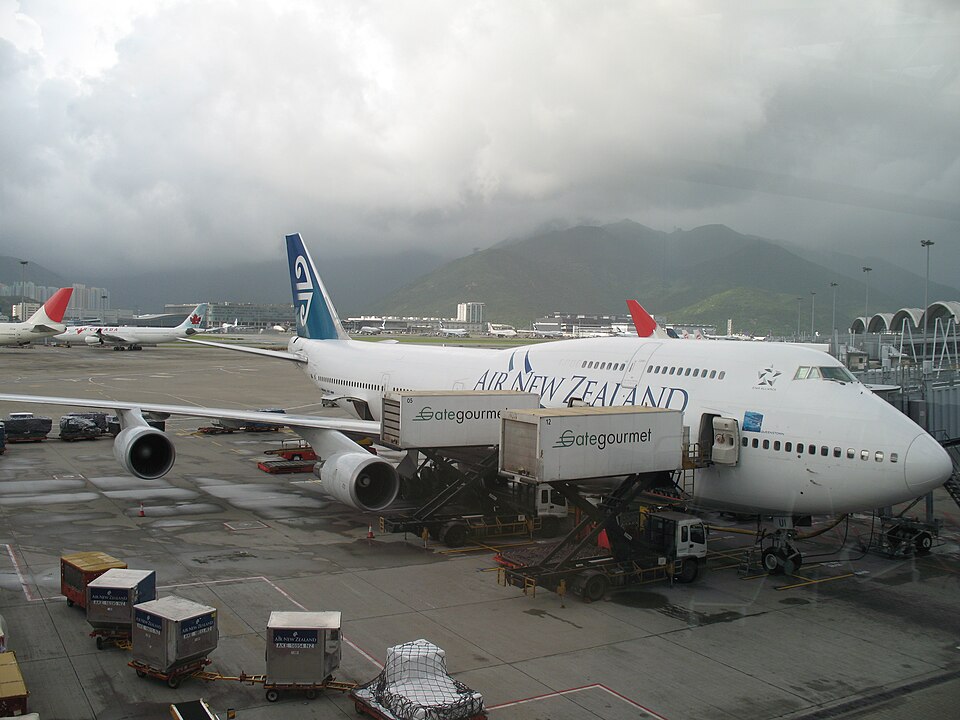
Illustrative photo. Two catering trucks are raised beside the cabin doors of a widebody airliner, with cargo dollies in the foreground. The different equipment heights show how cabin supplies and lower cargo areas require different access arrangements around a parked aircraft.
Illustrative role/sector context. This does not depict or verify the employers, vacancies, qualifications or countries discussed below.
Actual employer examples — keep each country and notice separate
Essential, desirable and other conditions retain the author’s source classification. An empty category means no separate requirement was established in the reviewed source, not that employers have no requirements. Historical or closed notices are examples, not current vacancies.
Full bilingual posting read. Mandatory conditions and preferred logistics/English skills are distinguished; inconsistent experience wording is not resolved by inventing a threshold.
Employer essential requirements
Valid Canadian driving licence, ability to obtain AVOP D/A and stated security clearance.
At least 18; entitlement to work in Canada; French communication.
Employer desirable requirements
English and logistics experience.
Other stated conditions
Truck-driving experience: heading says one year; body says one–three years. Confirm the precise threshold.
Outdoor, height-related and manual work with variable shifts.
Duties supported by this example
Catering-truck transport and aircraft deliveries.
Undated Quebec post. Required road-licence class is not identified; the listed age is job-specific, not a worldwide rule.
Official legal, licensing and occupational context
Employer preferences are not automatically law. Official guidance and occupational descriptions are not necessarily binding rules. Each source’s jurisdiction, scope and gaps below remain separate.
Victoria: road-vehicle licensing
Transport Victoria distinguishes heavy-vehicle licence categories. The employer’s MR/HR requirement must be matched to the vehicle and current licensing conditions; it does not by itself authorise airside driving or high-loader operation.
Victorian heavy-vehicle licence categories, including MR and HR.
Limitations
Category must match the vehicle; road licensing is separate from airport access and task-specific equipment competence.
Unresolved research and applicability
Two specific employer examples verified; current availability unconfirmed. YHU experience wording and vehicle class remain unclear. Airport-specific permits and Canadian licensing/access applicability require local confirmation.
Explore a possible entry route
List the role’s separate permissions: road vehicle, airport driving/access and equipment/task authorisation. Ask which must be held at application and which the employer arranges after selection. A generic forklift certificate is not proof of high-loader competence.
Compare the advertised experience and roster with your genuine background. If wording conflicts, seek clarification through the employer’s normal recruitment process instead of assuming the easiest interpretation. Individual screening and work-rights decisions cannot be determined by this career guide.
Prepare examples of reliable deliveries, accurate records and respectful customer handovers from work you actually performed. State the vehicle types and tasks honestly. Never practise approaching an aircraft, lifting a catering body or using airport radios outside authorised training.
Learning exercises — not proof of professional competence
Create a fictional delivery handover for harmless classroom supplies: item reference, expected count, observed discrepancy and person notified. Do not include aircraft positioning, loading sequences or operational checklists.
Build a personal learning tracker with separate fields for road credentials, employer induction, supervised equipment learning and assessment scope. Label every fictional example clearly and never represent a planned course as a qualification already held.
Preparation prompts — not reported interview questions
Preparation prompt: describe how you handled a delivery discrepancy without concealing it or making an unauthorised substitution. Explain the factual record and escalation route.
Ask how new drivers are supervised, how airport permissions are obtained, what equipment assessment is required and how driving responsibilities differ from food handling. Confirm the specific site and shift pattern before relying on general company information.
Progression to investigate
With experience and further assessment, investigate delivery-team coordination or training support. Moving to other ground equipment or supervisory work requires a new scope check rather than automatic transfer.
Scope and review limits
Educational requirements guide, not operational instruction or an employment guarantee. Educational reference — verify current requirements with the relevant authority.
Conditions belong to the named employer, post and jurisdiction. They are not worldwide eligibility rules; check the current advertisement and local authority before making training or application decisions.
No high-loader operation, aircraft approach, vehicle manoeuvre, lifting-platform or catering food-safety procedure is taught.
AI-assisted educational preparation. Source availability and hiring conditions can change. No personal data is collected, no application is sent, and no employment or eligibility outcome is promised.