Aviation human factors specialist — employer requirements guide
On this page — jump to a section
Aviation human-factors specialists study how people, tasks, equipment and organizations interact. The role is not simply persuading individuals to try harder, nor does it imply qualification to diagnose or treat a medical condition. The examples contrast operational-system development with independent accident investigation. [REG1, EMP1, EMP2]
Educational reference · 27 October 2026. Educational reference — verify current requirements with the relevant authority. This is not a qualification, admission decision or operational publication.
Job-specific employer examples below are separate from the broad sector guides. They are selected evidence, not an application service, a live vacancy feed, worldwide eligibility rules or an assessment of your circumstances.
Specific employer examples
2
Supporting employer context sources
0
Evidence last checked
2026-10-27
Countries / scope represented
Netherlands — Maastricht; United Kingdom
Legal / licensing applicability
unresolved
Reference status
Educational reference — verify current requirements with the relevant authority.
Where employers use this role
Air navigation service organization
Independent safety-investigation authority
What the work involves
Assess human implications of proposed system or workplace changes. [EMP1]
Plan studies and communicate evidence to project teams. [EMP1]
Support learning or investigation through appropriate human-factors methods. [EMP1, EMP2]
Work settings
ANSP project and operational-support teams
Investigation authority in the second example
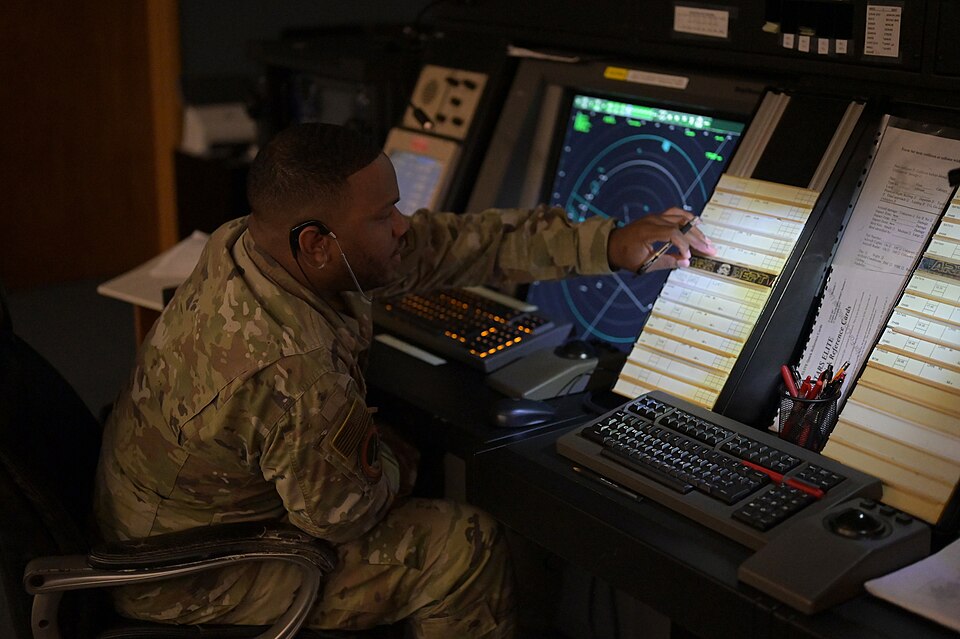
Illustrative photo. A controller examines a vertical rack of flight-progress information next to electronic displays. The scene illustrates how different information formats can be arranged within one control position.
Illustrative role/sector context. This does not depict or verify the employers, vacancies, qualifications or countries discussed below.
Actual employer examples — keep each country and notice separate
Essential, desirable and other conditions retain the author’s source classification. An empty category means no separate requirement was established in the reviewed source, not that employers have no requirements. Historical or closed notices are examples, not current vacancies.
[EMP1] EUROCONTROL Maastricht Upper Area Control Centre — Human Factors Expert, NOC-MA-2026-AD/1077
Mandatory wording or requirements heading; preferred wording kept separate.
Employer essential requirements
Relevant postgraduate human-factors degree and professional-body accreditation.
Broad, current knowledge of human-factors subjects.
Employer desirable requirements
No separate items established in this reviewed source.
Other stated conditions
Investigation specialism rather than system-development appointment.
Duties supported by this example
Human-factors investigation.
One employer and stated role only; this record does not establish current hiring unless explicitly marked active.
Official legal, licensing and occupational context
Employer preferences are not automatically law. Official guidance and occupational descriptions are not necessarily binding rules. Each source’s jurisdiction, scope and gaps below remain separate.
Conceptual scope, not a personal licensing rule
ICAO explains human factors as applying knowledge of people’s abilities and limitations to equipment, environments and work. Human performance describes how people contribute to system performance. These concepts do not establish one worldwide entry qualification. [REG1]
Public overview, not an individual occupational licence, national appointment rule or reproduced manual.
Unresolved research and applicability
The independent employer examples have different specialisms and seniority.
No complete national professional-title, accreditation or legal applicability review was performed.
Explore a possible entry route
Choose a setting: system design, operational support or investigation can involve different evidence and professional backgrounds. Compare a full vacancy with your current education and experience rather than assuming that all human-factors titles mean the same work.
Record the level and subject of education, methods experience, professional accreditation and preferred aviation exposure separately. The AAIB accreditation requirement is specific to that description; do not silently apply it to every human-factors position.
Build ethical research and clear-writing foundations using low-risk everyday tasks. For formal study or research, check supervision, consent and data-protection arrangements. A short introductory exercise cannot establish professional research competence or clinical authority.
Learning exercises — not proof of professional competence
Evaluate the clarity of a fictional library booking form. List ambiguous labels and propose alternative wording; ask a willing adult reader for feedback without collecting personal or sensitive information. Record the small sample limitation.
Write a study outline for comparing two non-safety-critical page layouts: question, observations to collect and limits. Do not claim that this validates an aviation interface, diagnoses users or predicts operational performance.
Preparation prompts — not reported interview questions
Preparation prompt, not a real employer question: how would you distinguish a design problem from an unsupported assumption about an individual’s ability? Prepare an example grounded in observable evidence.
Explain how you would communicate a finding that is useful but uncertain. Describe why study scope, participant selection and alternative explanations matter, without inventing research credentials.
Progression to investigate
Investigate specialist research, human-centred design, training or safety roles through current employer criteria. Investigation, engineering and clinical professions have separate entry systems; human-factors experience does not automatically qualify someone for them.
Scope and review limits
Educational reference — verify current requirements with the relevant authority.
Examples are selected employer conditions, not an exhaustive application checklist or worldwide eligibility rules. Verify the current notice before acting.
Learning exercises are not operational training, assessment or evidence of professional authorization.
No emergency response procedures, screening methods, investigative tactics or personal medical eligibility advice are provided.
AI-assisted educational preparation. Source availability and hiring conditions can change. No personal data is collected, no application is sent, and no employment or eligibility outcome is promised.