Ground support equipment mechanic — employer requirements guide
On this page — jump to a section
Ground support equipment mechanics maintain the vehicles and machinery used to support airport operations. This is equipment-maintenance work, not automatically an aircraft-maintenance engineer’s job. A workshop background may be relevant, but the equipment type, technical responsibilities and permission to release work must be understood for the actual post.
Educational reference · 27 October 2026. Educational reference — verify current requirements with the relevant authority. This is not a qualification, admission decision or operational publication.
Job-specific employer examples below are separate from the broad sector guides. They are selected evidence, not an application service, a live vacancy feed, worldwide eligibility rules or an assessment of your circumstances.
Specific employer examples
1
Supporting employer context sources
0
Evidence last checked
2026-10-27
Countries / scope represented
Malaysia — KLIA, Kuala Lumpur
Legal / licensing applicability
unresolved
Reference status
Educational reference — verify current requirements with the relevant authority.
Related job titles and aliases
GSE technician
GSE mechanic
Titles vary between employers; an alias does not make qualifications or duties interchangeable.
Where employers use this role
Ground-equipment maintenance/rental supplier
Ground-handling workshop
Airline or airport fleet-maintenance function
What the work involves
Carry out assigned preventive and corrective equipment maintenance.
Investigate faults and report work outside the assigned competence or authority.
Keep clear maintenance records and communicate equipment status.
Work settings
Workshop and assigned airport equipment locations; breakdown attendance and outdoor tasks may form part of the post.
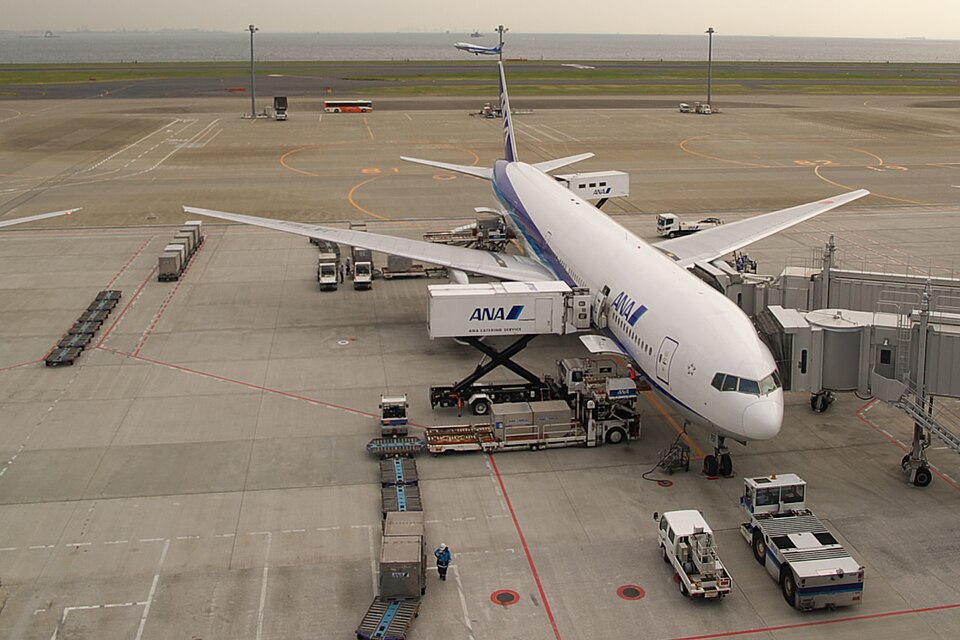
Illustrative photo. An airliner sits among a jet bridge, raised service vehicle, carts and other stand equipment. The elevated viewpoint makes the distribution of ground services around the aircraft visible.
Illustrative role/sector context. This does not depict or verify the employers, vacancies, qualifications or countries discussed below.
Actual employer examples — keep each country and notice separate
Essential, desirable and other conditions retain the author’s source classification. An empty category means no separate requirement was established in the reviewed source, not that employers have no requirements. Historical or closed notices are examples, not current vacancies.
Class D/GDL licence; GSE experience, basic welding/fabrication and maintenance-planning familiarity.
Other stated conditions
The employer explicitly welcomes candidates who do not meet every criterion; it asks for relevance rather than perfection.
Duties supported by this example
Mechanical/electrical/hydraulic/pneumatic maintenance, inspections, breakdown work and records.
Specific Malaysian workshop post. No closing date is visible; live page availability does not establish continuing recruitment.
Official legal, licensing and occupational context
Employer preferences are not automatically law. Official guidance and occupational descriptions are not necessarily binding rules. Each source’s jurisdiction, scope and gaps below remain separate.
England learning comparison; Malaysian authorisation applicability unresolved
The official heavy-vehicle standard provides an adjacent competence framework. It does not establish the permissions required for the Malaysian example. Confirm local trade, vehicle, airside and equipment-specific requirements with the hiring organisation and competent authority; do not treat an aircraft engineering licence as a universal GSE prerequisite.
Adjacent technical-learning reference for heavy-vehicle diagnosis, inspection and maintenance.
Limitations
This is a heavy-vehicle standard, not a GSE-specific approval, Malaysian qualification equivalence or aircraft-certifying licence. Page updated 25 October 2024; checked 27 October 2026.
Unresolved research and applicability
Only one fully verified specific employer post. Other TCR country pages were inaccessible and Menzies ATS pages returned no substantive job content; none is counted as a second example.
Malaysian equipment/trade requirements and foreign qualification equivalence have not been exhaustively reviewed.
Explore a possible entry route
Inventory your real training and experience by equipment and system, rather than writing “mechanical skills” alone. Distinguish tasks completed under supervision from those you were authorised to finish independently. Compare this evidence with the actual advert, including its openness to candidates who do not meet every listed criterion.
Use a recognised learning route appropriate to your country and intended equipment. The English standard offers vocabulary for comparing training content, but it is not proof of international equivalence. Ask providers what practical assessment, supervision and equipment exposure their course includes before paying for a programme.
Investigate the transition from a general workshop to airport equipment. Prepare questions about induction, access permissions, technical manuals, specialist electrical or hydraulic training and work-release responsibilities. Do not practise repairs on operational equipment or assume road-vehicle experience covers unfamiliar airport machinery without assessment.
Learning exercises — not proof of professional competence
Prepare an anonymised portfolio entry from work you genuinely performed and may lawfully share: reported symptom, information consulted, your authorised contribution, verification and lesson learned. Remove client, employer and proprietary details. If you have no practical experience, label a classroom exercise honestly instead.
Create a fictional maintenance-record template with asset identifier, reported concern, work status, outstanding questions and handover. Do not fill it with invented professional sign-offs. Use it to show how you distinguish a reported symptom from a confirmed cause and a completed action from a recommendation.
Preparation prompts — not reported interview questions
Preparation prompt: describe a time the evidence did not support your first explanation of a fault. Show how you revised your view and sought appropriate support, without providing a repair procedure beyond your qualification or disclosing confidential maintenance information.
Ask the employer which equipment families the post covers, what training is provided for unfamiliar systems, who authorises return to service and how workload is scheduled. Clarify the advertised experience wording and acceptable qualifications; this guide cannot decide whether your credential is equivalent.
Progression to investigate
Explore specialist diagnostics, workshop planning, fleet-reliability support or supervision. These directions can require additional training and responsibility; none is an automatic outcome of holding a general mechanics qualification.
Scope and review limits
Educational requirements guide, not operational instruction or an employment guarantee. Educational reference — verify current requirements with the relevant authority.
Conditions belong to the named employer, post and jurisdiction. They are not worldwide eligibility rules; check the current advertisement and local authority before making training or application decisions.
No maintenance, electrical isolation, lifting, pressure-system or repair procedure is provided. Work on equipment requires the applicable training, technical instructions and authorisation.
AI-assisted educational preparation. Source availability and hiring conditions can change. No personal data is collected, no application is sent, and no employment or eligibility outcome is promised.